
Baltimore Recorders.org
About the Electric Wind Instruments
One aspect of electronic wind instruments that is apparent upon looking at them is the types of keys they employ. These are obviously extremely important as they are a major factor in the ergonomics of the instrument. The spatial arrangement of the keys/ their spacing, the force required to press them, and their throw/depth are all worth examining. Some instruments have buttons, something like an arcade game. The Roland Aerophone is in this class, as is the Nux NES-1. Others use plastic keys, such as Yamaha's instruments and the Odisei Travel Sax. Some instruments, such as the Sylphyo, have touch sensitive pads. The EWI by AKAI use capacitance based touch sensitivity. Some instruments use photo receptors to determine whether a hole has been closed. The Warbl uses this technology. The highest-end instruments have keywork that is similar to that used on traditional woodwind instruments. The EMEO digital practice saxophone and the Roland Brisa both have traditional keywork.
The physical keys, such as used on the Roland and Yamaha instruments, give you a place to rest your fingers when you are not playing a note. It helps orient your hand placement. The downside is that keys can have mechanical problems over time, typically they become unreliable and do not detect when you press the key. Many of the older Yamaha instruments, such as the WX 7, have key switches that no longer work. Keys can also make noise. The Roland Aerophone AE series have been criticized for the noise that the keys produce. Its button keys also do not feel anything like those on acoustic instruments.
While we are on the topic of keys, another factor is how the instruments handle changing octaves. Two of the main systems are the capacitance based roller system that is used on Akai instruments, and the other are multiple button systems that are used on some Roland instruments. The roller system allows an instrument to easily access more than three octaves in range. However, it takes getting used to, and you may lose your hand position when using another key, and not be able to find the appropriate octave.
One aspect of electronic wind instruments that is not visible are their breath sensors. Early instruments, such as the Steiner, had a sealed system that would detect pressure. You would not blow through the instrument. Instead you would lightly blow into the closed system to raise the pressure. The excess air would need to be released from the sides of your mouth. This is radically different than a traditional wind instrument, and many musicians disliked it. However, it is highly sensitive to breath pressure. The Berglund NuRAD uses this type of breath control. (Although alternative pressure sensitivity is also available on the NuRAD)
Other electronic wind instruments detect breath pressure, but allow you to blow through them. This being said they do not take as much air as most acoustic instruments. Most wind controllers fall into this category. They include the instruments by AKAI, Roland and Yamaha.
Some home made instruments use microphones to detect the movement of air, and do not detect air pressure in the same fashion as the others.
Now that we have considered some of the ergonomics, let us consider another important aspect; the sound. Electronic wind instruments, like electronic keyboards, come in two varieties; ones with integrated synthesizers and ones without them. Having an integrated synthesizer is certainly convenient. You can play them through integrated speakers, plug in headphones, run a cable to a speaker, or pair them up to other devices with Bluetooth. You also do not need to have another synthesizer around (even if it is just your cell phone), and porting another synth to gigs is a hassle. Most importantly the integrated synth may have sounds or effects that are unique. However, the synth adds a bit a weight to the instrument, and such ergonomics can be very important. You may also not like the sound of a particular instrument on the integrated synth, and thus be interested in using an external synth anyway. (The sounds on most current instruments are not sampler based, so if you are looking for instruments that have been sampled, then the available integrated synths may not help you.)
Instruments without synths produce no sound on their own. They are used to control other electronic instruments or synthesizers, and are commonly called controllers. It may seem strange to have an instrument that does not make sound. However, in many cases, it is not a big drawback. These days it is easier to synthesize sounds than ever before. There are synth apps for cell phones, laptops have software synths, and there are dedicated hardware synths. Some superb electronic wind instruments do not have synths, such as the NuRAD.
To use an electronic wind instrument to control another synthesizer they need to be connected. Traditionally a five-pin DIN MIDI cable was used to link the devices. Most modern instruments no longer support MIDI cables, instead they have USB A or USB C ports. These can be used to plug directly into a computer, or into a MIDI adapter. The latest wave of instruments have wireless connectivity, using Bluetooth.
Some hardware synths specialize in synthesis for electronic wind instruments. One of particular note is the XpressO by DynaSample. It has the most realistic and responsive sounds of acoustic instruments of any hardware based synthesizer that I have heard. It is truly a great synth, and worth auditioning. An older wind synthesizer of note is the Yamaha VL70. It was the defacto standard hardware synth for wind instruments for many many years.
Most of the electronic wind instruments on the market fill a particular niche. Many are marketed at people who play a specific type of instrument.
Brass Instruments
- Berglund Instruments NuEVI
- Digibrass Tilt 2.0
- Morrison Digital Trumpet (MDT) by Marshall (out of production)
- Stella Digital Trumpet by David Baylies
- SuperStatic Electric Trumpet
- Yamaha EZ Trumpet (out of production)
The six electronic brass instruments listed here are all quite different. The Stella is played the most like an acoustic trumpet. A microphone picks up the sound of your lips buzzing, and uses that signal in producing a sound. You hum into the EZ trumpet. You simply blow into the Morrison, SuperStatic, and the Tilt, as if you are blowing into a straw. The NuEVI you blow into a sealed system, increasing the pressure.
They also differ in the type of keys that they have. The NuEVI and Tilt use capacitance based pads. The Tilt has four main pads, while the NuEVI has three. The NuEVI has numerous other pads, including one on the far end of the instrument. The other four instruments have electronic variable resistors in the form of pseudo valves. To change harmonics, the tilt uses a gyroscopic sensor to detect lateral rotation, or pads on the side of the instrument. The Morrison has numerous buttons on the side of the instrument. The NuEVI has octave rollers on the bottom of the far end of the instrument. The Superstatic has a rotary knob on the bottom of the instrument.
The SuperStatic, Tilt, and EZ Trumpet have built in synths. The others do not. The EZ Trumpet is the only instrument with a built-in speaker. It also has a headphone jack. The EZ Trumpet can also play accompaniments. It has 10 built in songs, but others can be loaded into the instrument. It can also create a broader 'sectional' sound, by playing in octaves. The SuperStatic is designed to plug into an amp. The Tilt has a 1/8" line out, and a headphone jack.
The EZ Trumpet can be played in one of several modes. One mode faithfully reproduces the pitch that you hum. A second mode quantizes the pitch to the nearest semitone. It does not have a special key or feature to bend the pitch. The Tilt can bend pitches by raising and lowering the bell of the instrument. The NuEVI can bend pitches with its bite sensor or with its two pitch bend sensors on the bottom of the instrument. There is also a vibrato sensor on the bottom. The Morrison has a thumb trigger to bend pitches.
It should also be noted that other wind synths can also emulate brass three valve fingerings. However, if you are primarily a brass player, one of the instruments that more fully emulates a brass instrument is desirable.
Saxophones
- ASM Diosynth
- EMEO Digital Practice Saxophone
- Odisei Travel Sax
- Roland Aerophone AE series
- Synthphone
- Yamaha YDS-150
- Yamaha YDS-120
Like the brass instruments, the digital saxophones are all quite different. The Synthphone is literally an acoustic saxophone with electronics that have been integrated into its body. It no longer can be played acoustically, as the electronics fill the instrument. It is one of the most sophisticated and nuanced electronic instrument on the market. It is also one of the oldest, dating back to the 1980s. As you might expect, it costs substantially more than other electronic wind instruments. It is not an entry-level instrument. However, if you are pro, and want a digital saxophone, the Synthophone is the way to go.
The EMEO digital practice saxophone is made of brass, and has the keywork of a saxophone. However, it is smaller and does not have a bell, and is thus smaller and more portable than a sax. One major difference between it an a true reed instrument is that it does not have a bite sensor. Thus, it is really designed to work on fingering, as opposed to embouchure. It also does not have a synthesizer. If you are a pro, and want to practice with something that feels like the real thing, then the EMEO is for you. If you want something to use in performance, and want something that looks traditional, then it is also a good choice.
The Yamaha YDS-150 follows in the footsteps of Yamaha's earlier wind instrument the WX 11. It has extensive plastic keywork. However, unlike its predecessor it is designed to be similar to a saxophone, and even includes a brass bell. It has an internal synthesizer, and two speakers. Its sax sounds are some of the best on the market. It also features an app that lets you edit the sounds. It has a gyroscopic sensor which adds to its flexibility. From a professional standpoint, the one feature that it lacks is a bite sensor. It is certainly not necessary, and there are pads for bending, but for an instrument that is trying to be similar to a sax, it is notable that it is missing. (There are bite sensors that are made that can be used with the YDS, but they cost more than the instrument itself.) The YDS also features a custom sized mouthpiece. A regular mouthpiece will not fit on the instrument. It also does not have a traditional midi cable connection, although it can be connected via USB. More recently Yamaha released an entry level of the YDS, called the YDS-120. It lacks the brass bell of the 150. It also lacks the gyroscopic sensor and bluetooth connectivity. It has a mouthpiece that does not even have a reed.
One weakness of the YDS are its key switches. The instrument has long been criticized for having keys that do not register when they are pressed, even when it is new. The plastic key presses down on foam, which then compresses two sheets of plastic that complete a circuit. The distance between the sheets is small, in the order of the thickness of a sheet of paper, and in theory moisture can form in between the sheets and cause the keys to fail. More frequently, the foam above the switches becomes worn, and this causes damage to the switch or causes the switch not to activate. My take on this is that all such physical switches will fail over time, and happens to keyboard synthesizers as well. It is not unique to this instrument and I would not consider it a critical flaw. It is easy enough to confirm they are working when you purchase it. In the event that you encounter an issue, you can either have it professionally repaired or work on it yourself. The key switches can be replaced with parts from Yamaha if you are skilled. You can also rebuild the entire switch board. The simplest fix is to replace the foam, and put a stiff backing on the part of the key that presses on the foam. I do not think that they will fail very quickly and I also do not think the issue is too widespread, despite some vocal people in the online community. Yamaha is a large company. If the keys were a major problem, tons of instruments could be sent back. This would make the YDS unprofitable and the instrument would be discontinued. Far from discontinuing it, Yamaha released another version which uses the same components for the switches. The positive side of having its keys engineered this way is that they are nearly silent, and they have a nice cushion when you press them. They feel nicer and are quieter than most other wind instruments with keys.
The Odisei Travel Sax (2) is similar to the YDS-150 in that it has extensive keywork. However, it is very compact, about half the length of the YDS-150. This makes it easier to travel with. There are a variety of neck extensions for the Travel Sax. The smallest allows it to be played while seated in a cramped environment, such as a plane. Longer necks, and bent necks allow for more natural playing positions. The Travel Sax can use your regular soprano sax mouthpiece. Like the YDS-150 it lacks a bite sensor. Unlike many other instruments, it is designed so that users can easily perform basic maintenance. The keys can be replaced by the user, and come in a variety of colors.
Like the YDS, the Travel Sax also has a weakness that is frequently cited: its firmware and associated app. Despite the Travel Sax being on its second iteration, its firmware still has issues. Users have reported that the app can crash, and result in a situation in which sounds cannot be selected. Mac users, and ones who are not technically savvy, can even have difficulty updating the firmware to correct the problem. The bright side of software issues, is that, in theory, they will get sorted out in time. It would in no way deter me from purchasing the instrument.
The ASM Diosynth was released in late 2025. It features physical keys. However, they are not quite as close to the placement on a sax as they are on the Yamaha or even the Odisei. The strength of the instrument is its inclusion of ASM's Hydrasynth synthesis engine. It combines the realism of sampled instruments with traditional wavetable synthesis, modulators, filters, etc. It is truly an amazing instrument and looks set to shake up the market. I will provide more information in it once I have had an opportunity to try it.
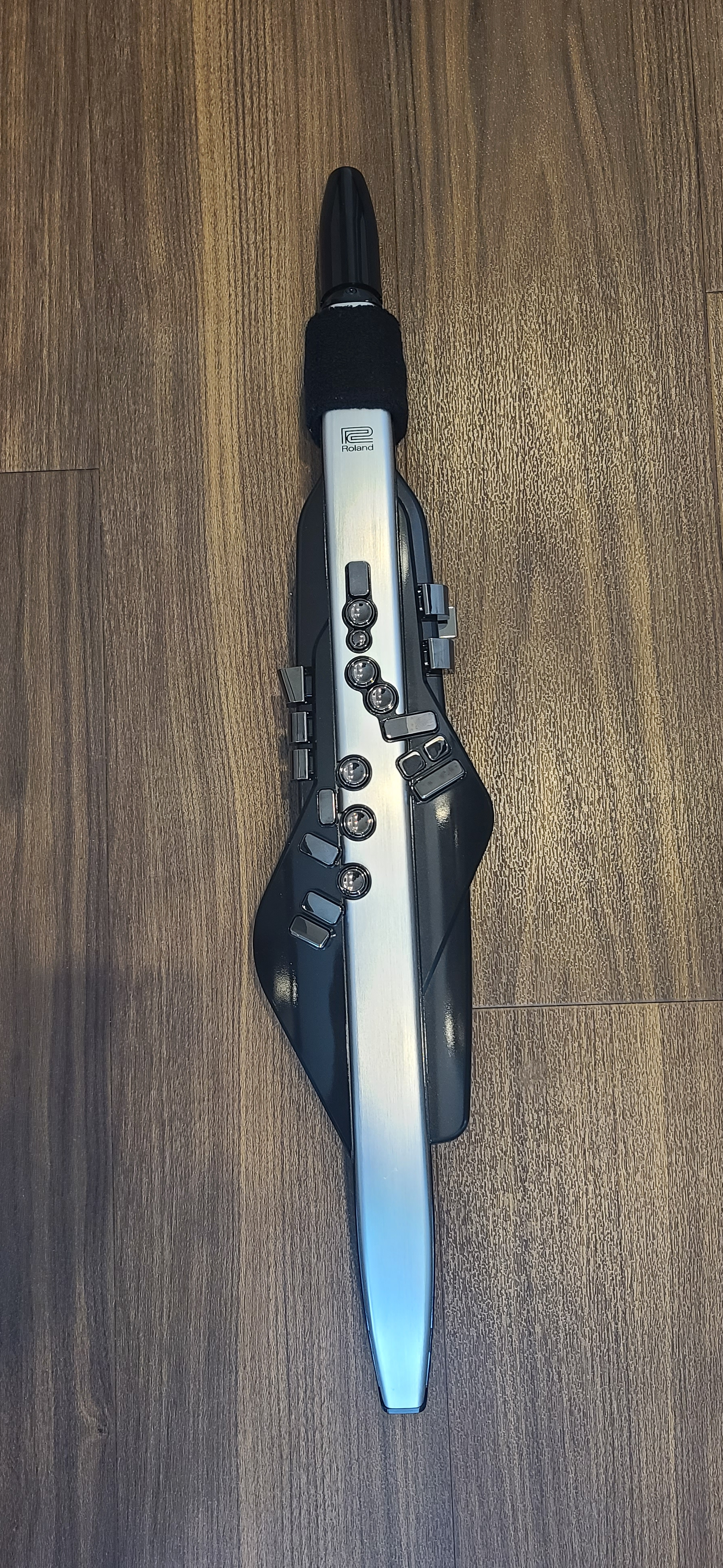
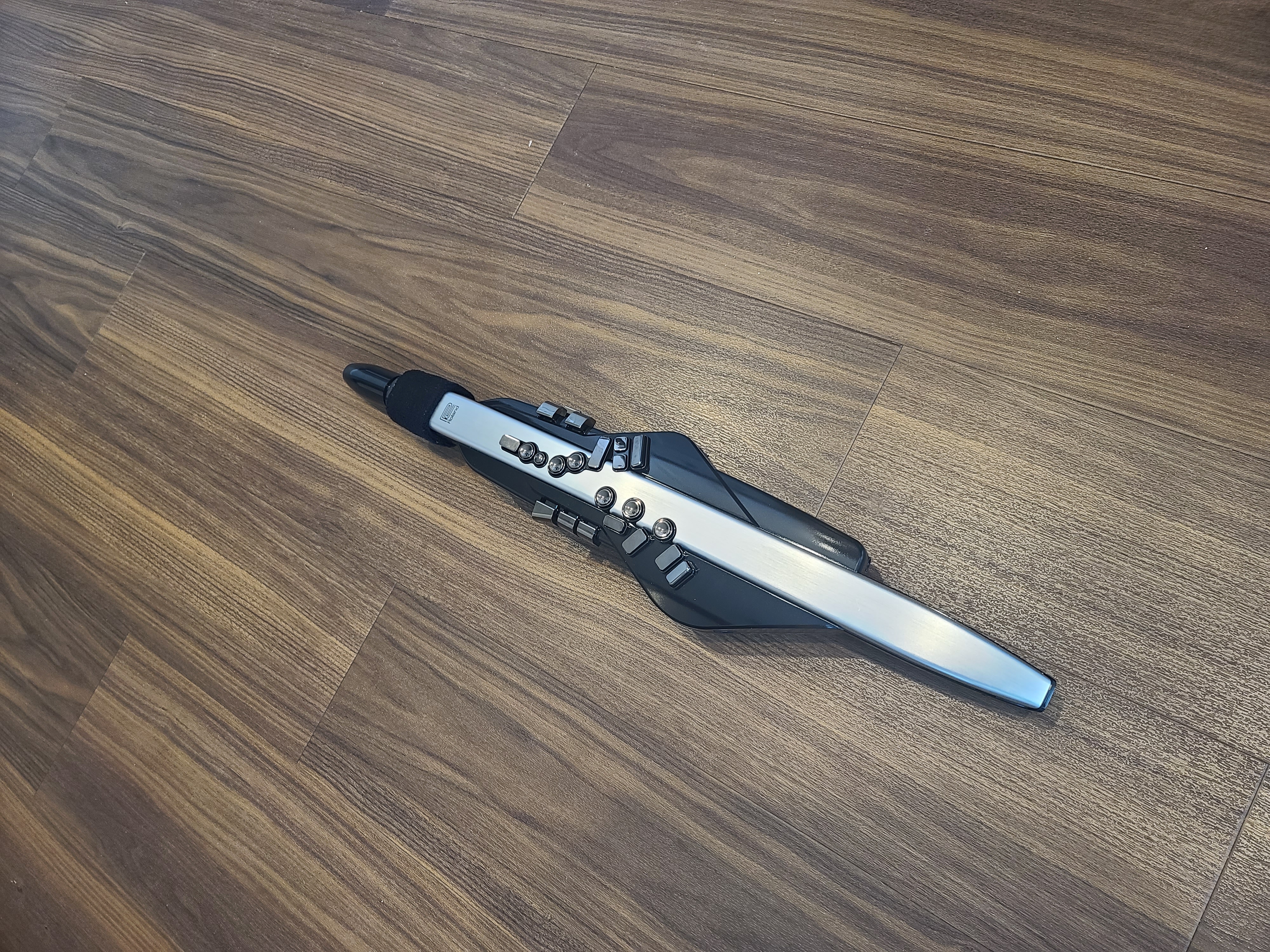
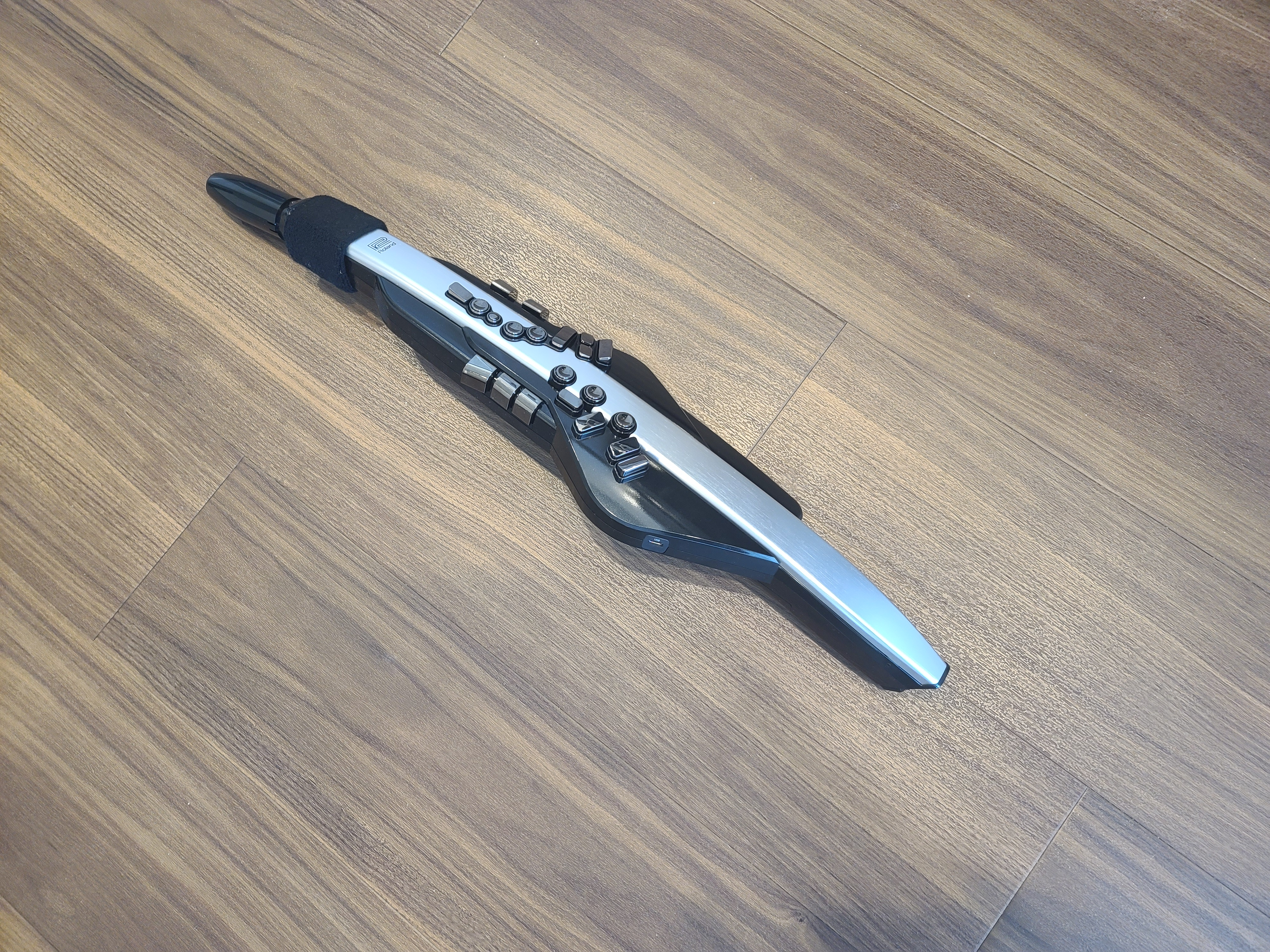
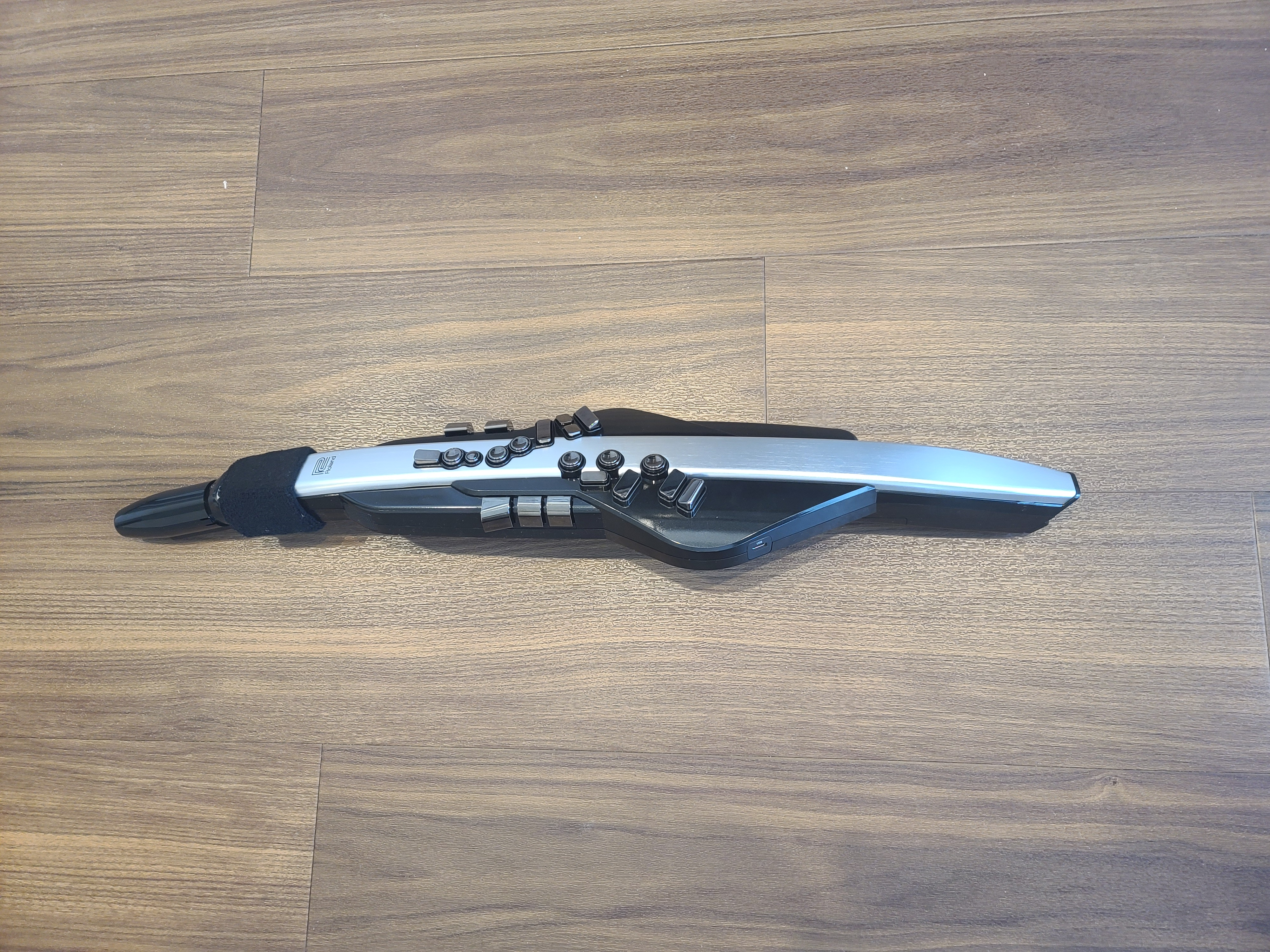
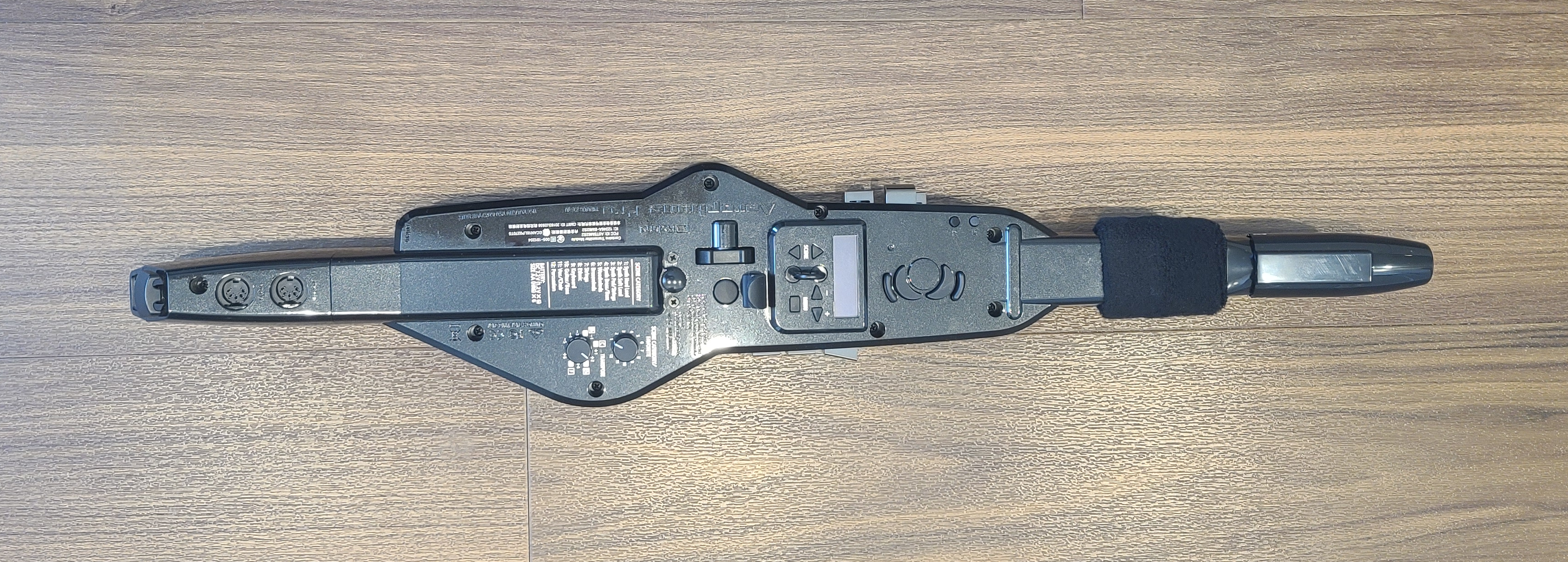
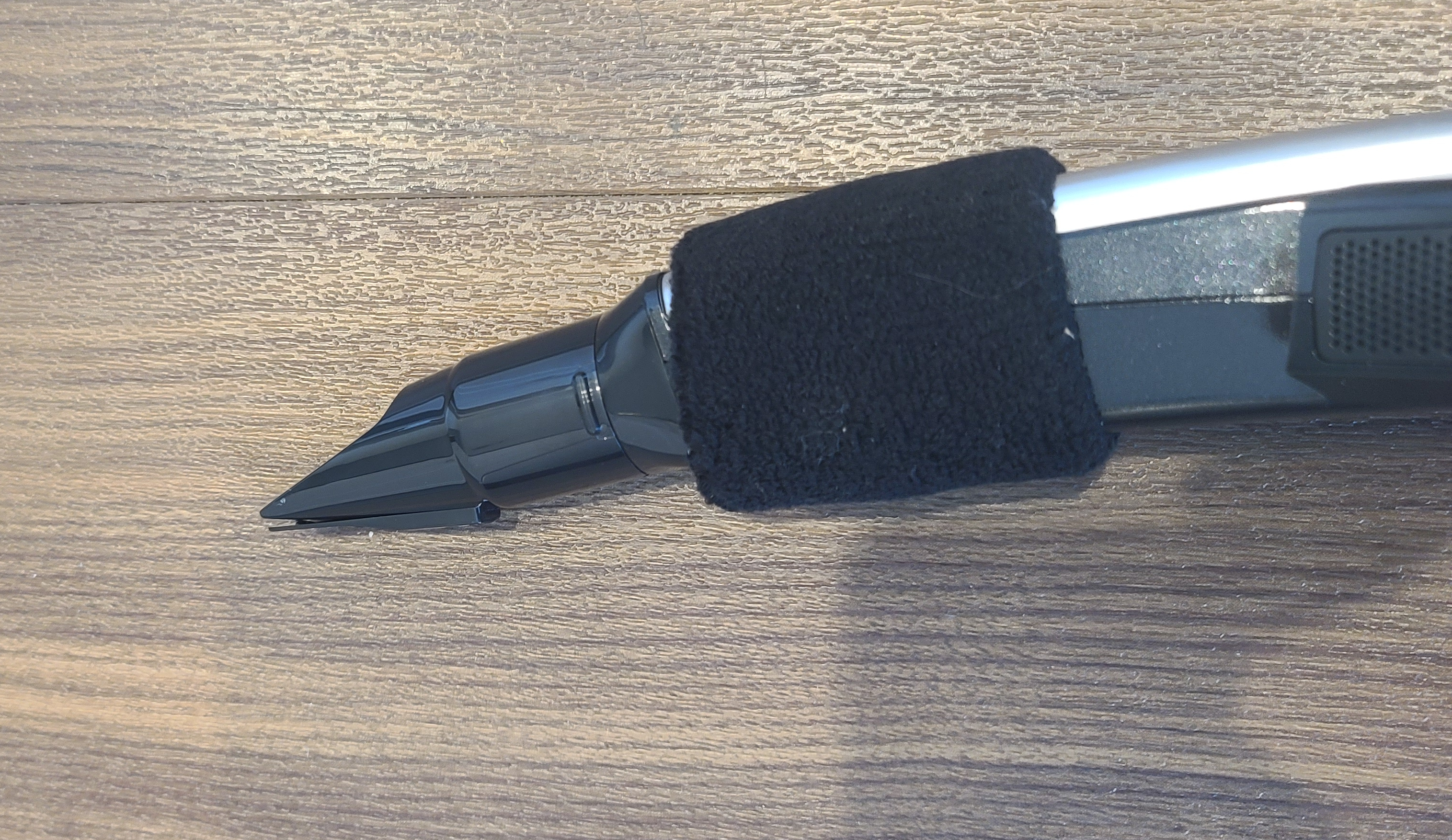
The Roland Aerophone-30 Pro does not look nearly as much like a saxophone as the other instruments mentioned in this section. However, it does have keys positioned similarly to a saxophone, including palm keys. For me these have functioned well, no issues with not detecting a key press. They do make some noise, but in a concert environment for popular music it is not an issue. It also has a bite sensor, that most of the other instruments lack. It also has a gyroscopic sensor. Its internal synthesizer is one of the best on the market. It has a particularly good assortment of synthesized sounds.
Other Instruments
There has not been such a great interest in creating electronic wind instruments that mimic other instruments. Thus, there are only a few for each type.
Flute
Roland has been devoting significant resources into producing electronic wind instruments. In the Fall of 2025 Roland released the Aerophone Brisa, which has keywork that is similar to a transverse flute, and an innovative mouthpiece. It is an engineering marvel. The entire synth was engineered to fit inside the narrow body of a flute. A speaker and rechargeable battery were also baking into the design. It was outfitted with high quality keys, as well as a screen and other functional buttons. I hope to acquire one soon, so that I can share it with you. Roland is famous for its synths, and the one in the Brisa is outstanding.
Clarinet
The Odisei Travel Clarinet is the first EWI with the key layout of a clarinet. Like other Odisei instruments is it marketed towards practicing on the road, as opposed to being used in a performance. So while you are touring, you can practice on the bus or in your hotel room and you not disturb anyone with the music. To facilitate travel and use in tight spaces, their instruments are much more compact than acoustic ones. They can easily be used while in a cramped seat, and also pack up in a small bag that can be carried with you.
Recorder
The re.corder is unique as it is both an acoustic instrument and an electronic one. It is a fully functional recorder, and an electronic wind instrument. The included app allows you to produce sounds on your tablet or phone. It is one of the least expensive electronic wind instruments.
Tin Whistle
The Warbl, by Mowry Stringed Instruments, is shaped very much like a chanter on a bagpipe, and is aimed at the traditional music market. It uses fingerings for highland pipes. If your bagpipe playing is annoying the neighbors, then this is a good alternative. It is highly portable. The Warbl is a MIDI controller, it does not contain a synthesizer. It can be used with apps on Android, and IOS, or a computer. Its one downside is that it must connect to the device with a USB cable, as it uses it for power. So if you want to use the phone or other device with headphones, you need to ensure it has both a USB port and a headphone jack. Each instrument is hand made by Andrew Mowry.
Melodica
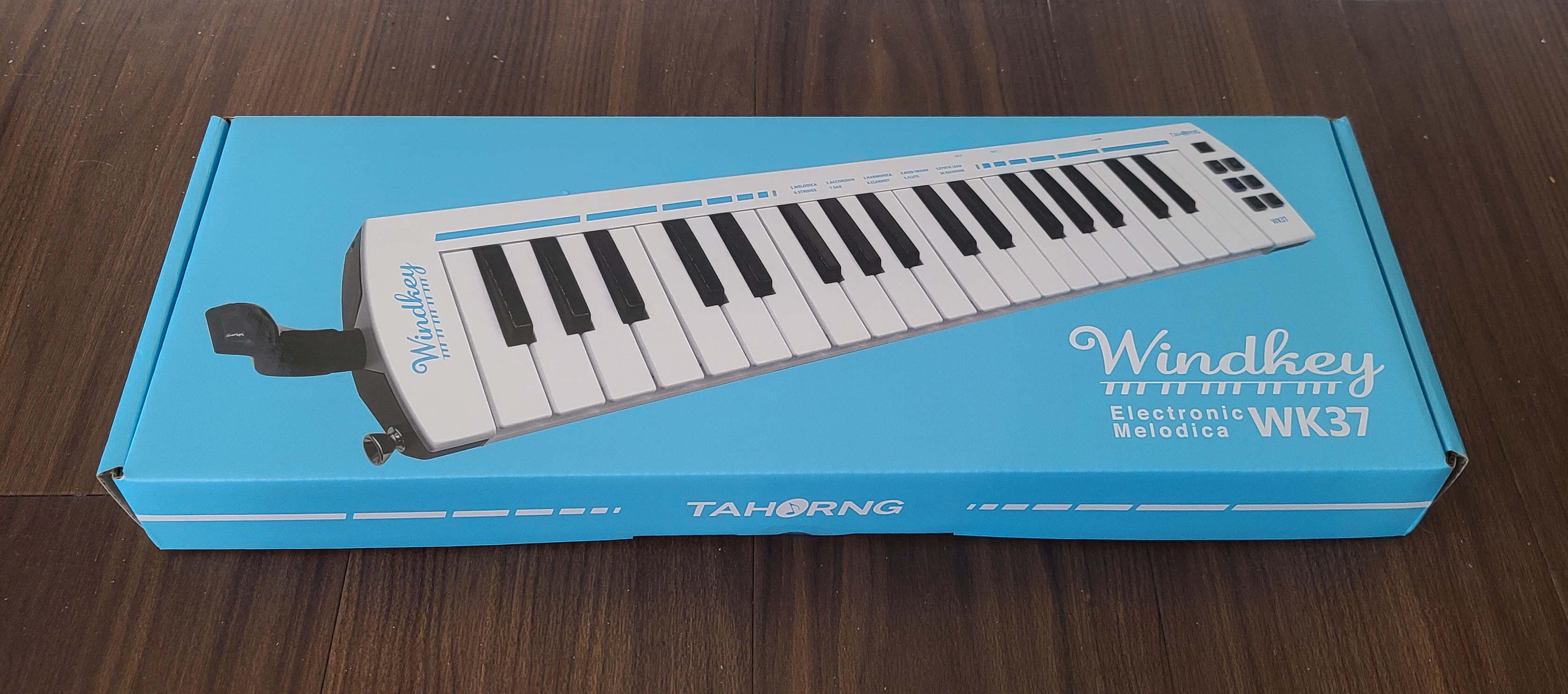
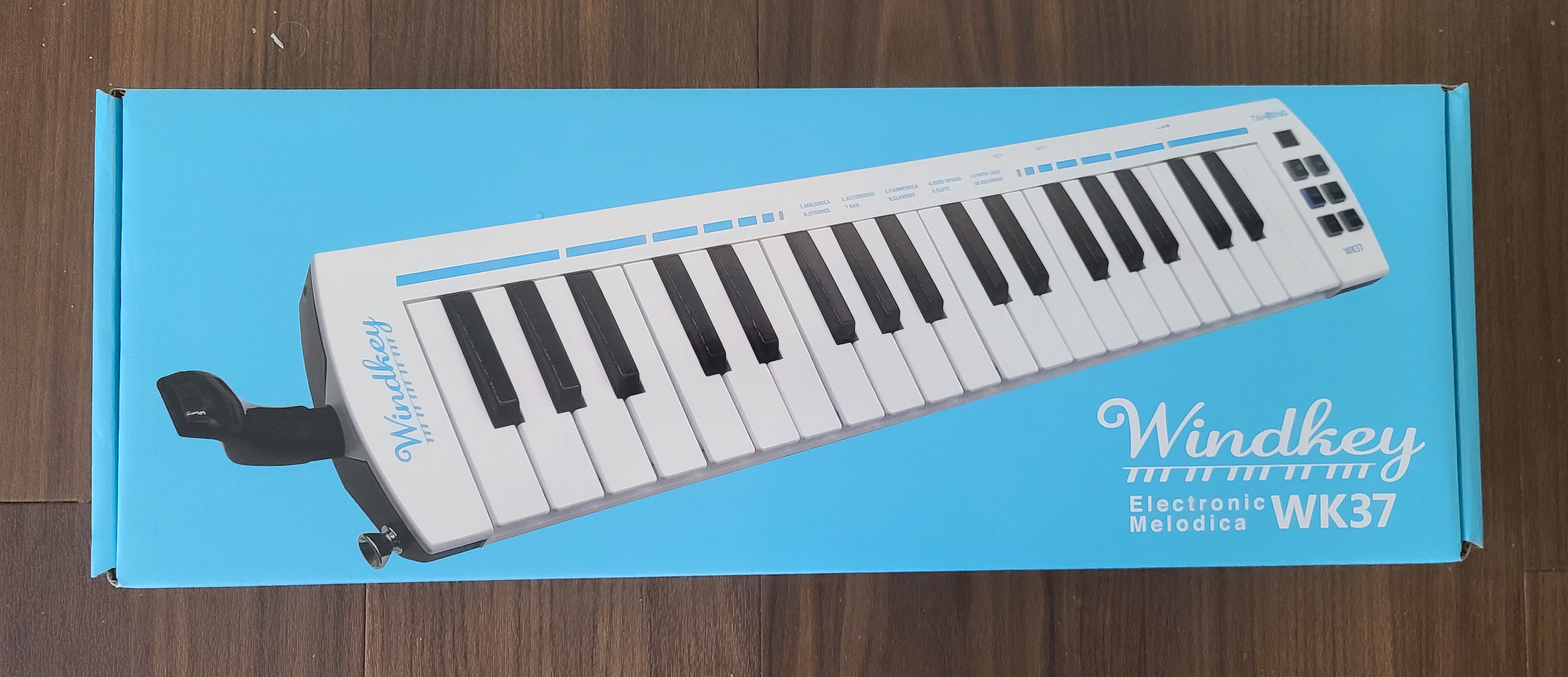
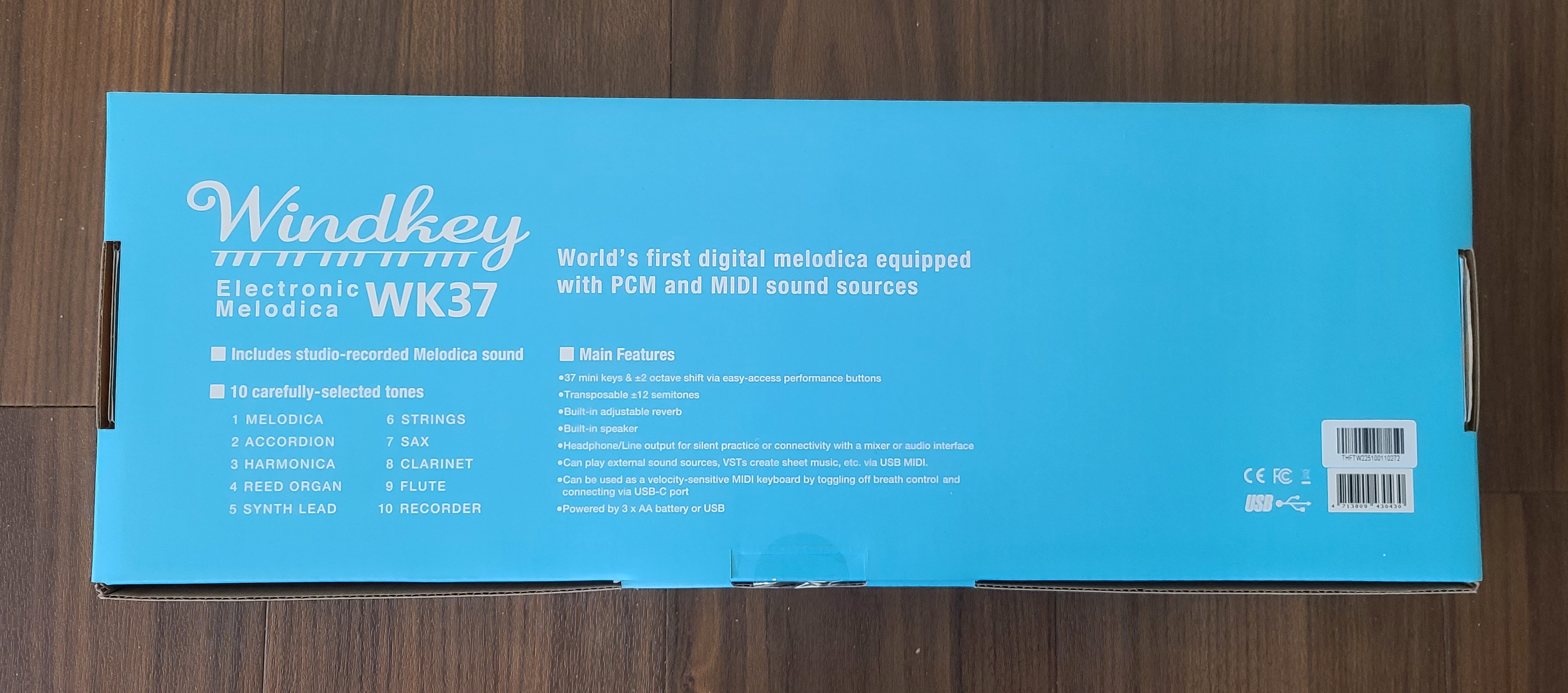
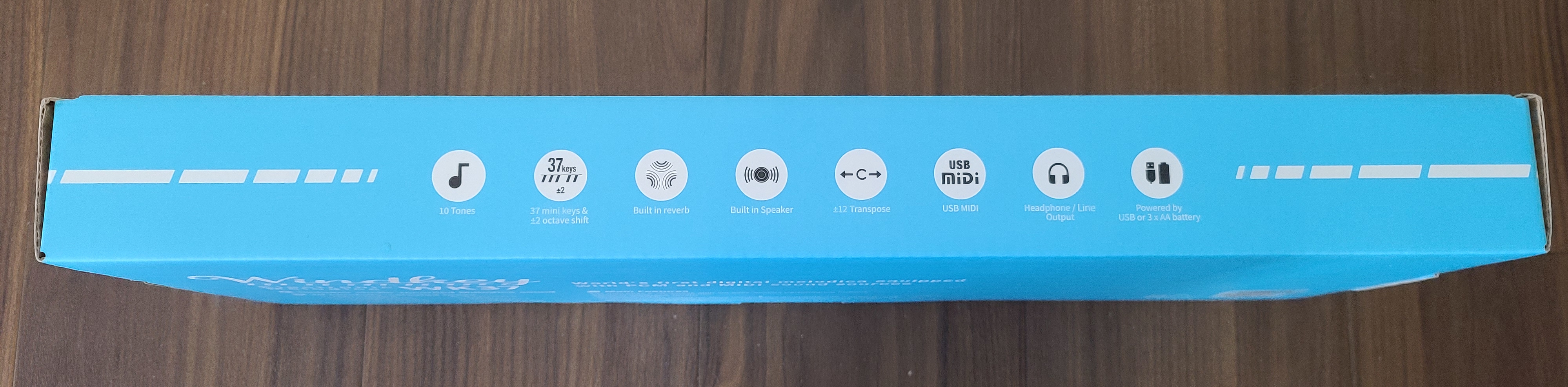
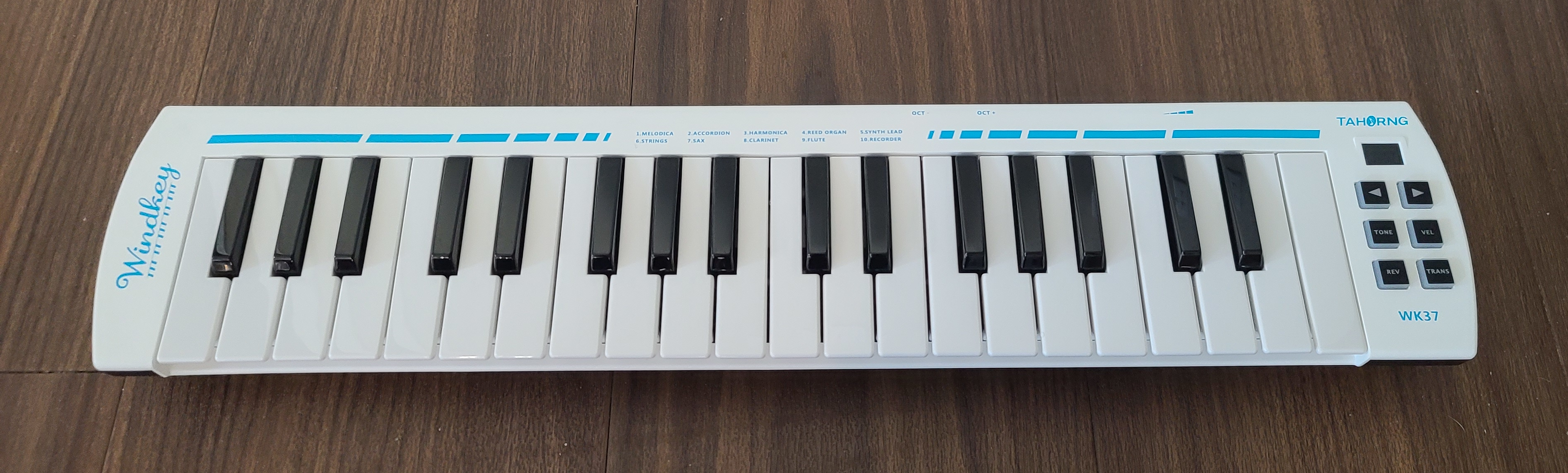
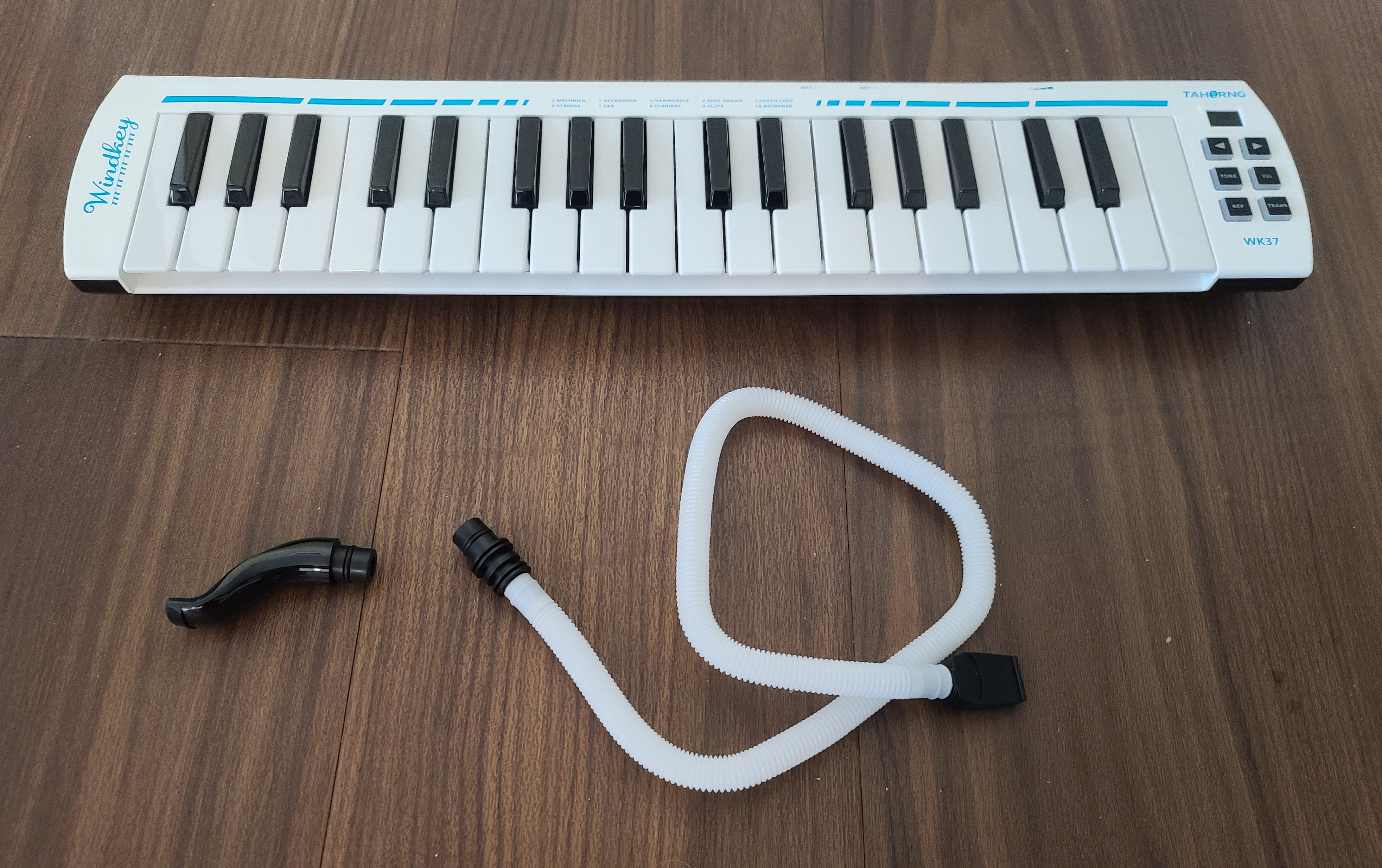
This is one I did not see coming. The melodica is a handheld wind instrument that uses a small keyboard to direct the airflow across metal reeds of the type used in harmonicas. It is closely related to reed organs such as shruti boxes. In late 2025 TaHong released the midiplus Windkey Electronic Melodica WK37, the world's first electronic melodica. It has a 3 octave keyboard starting at F. (There are 37 keys hence its name.) It has 10 built in sounds:
- Melodica
- Accordion
- Harmonica
- Reed Organ
- Synth Lead
- Stings
- Sax
- Clarinet
- Flute
- Recorder
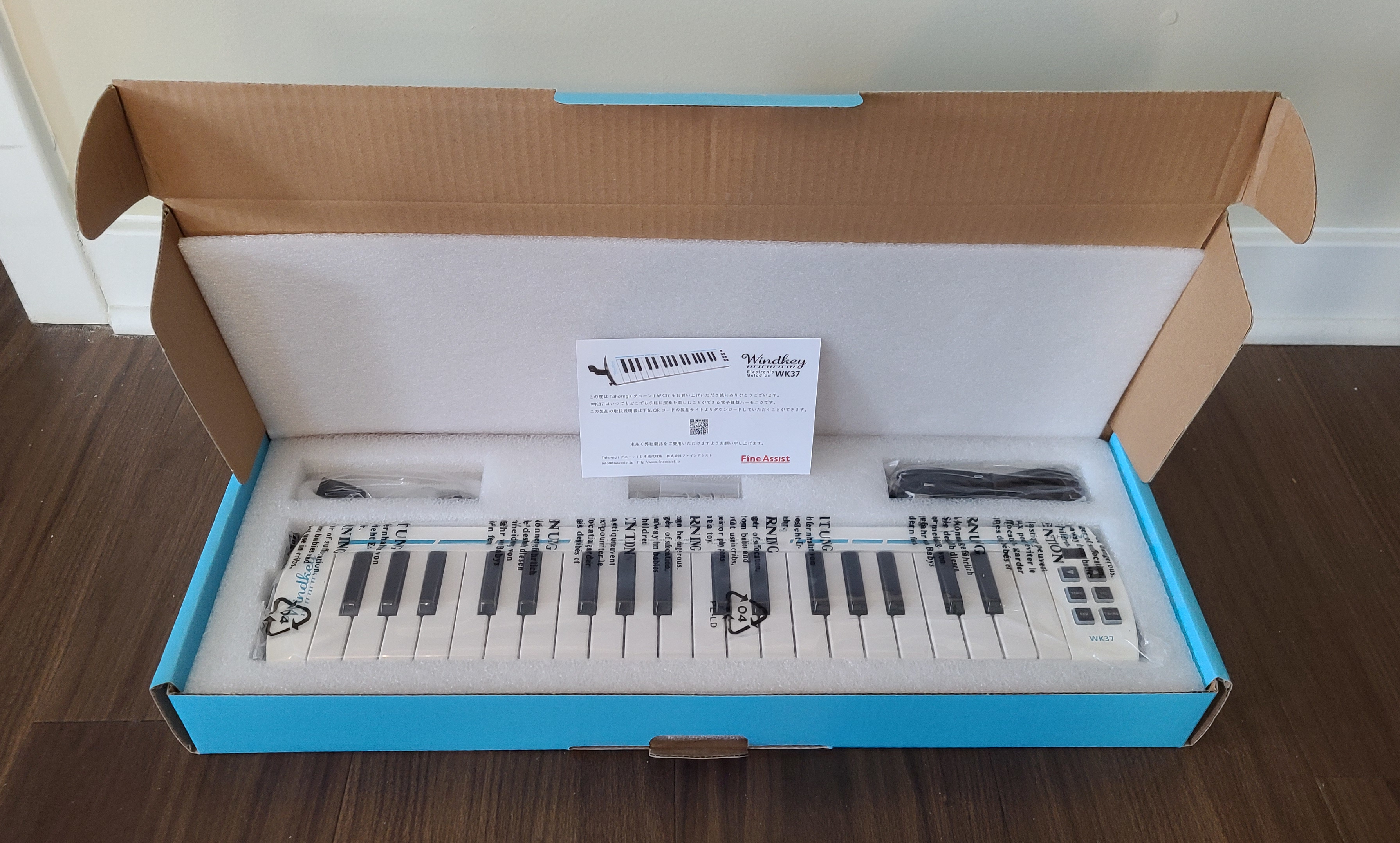
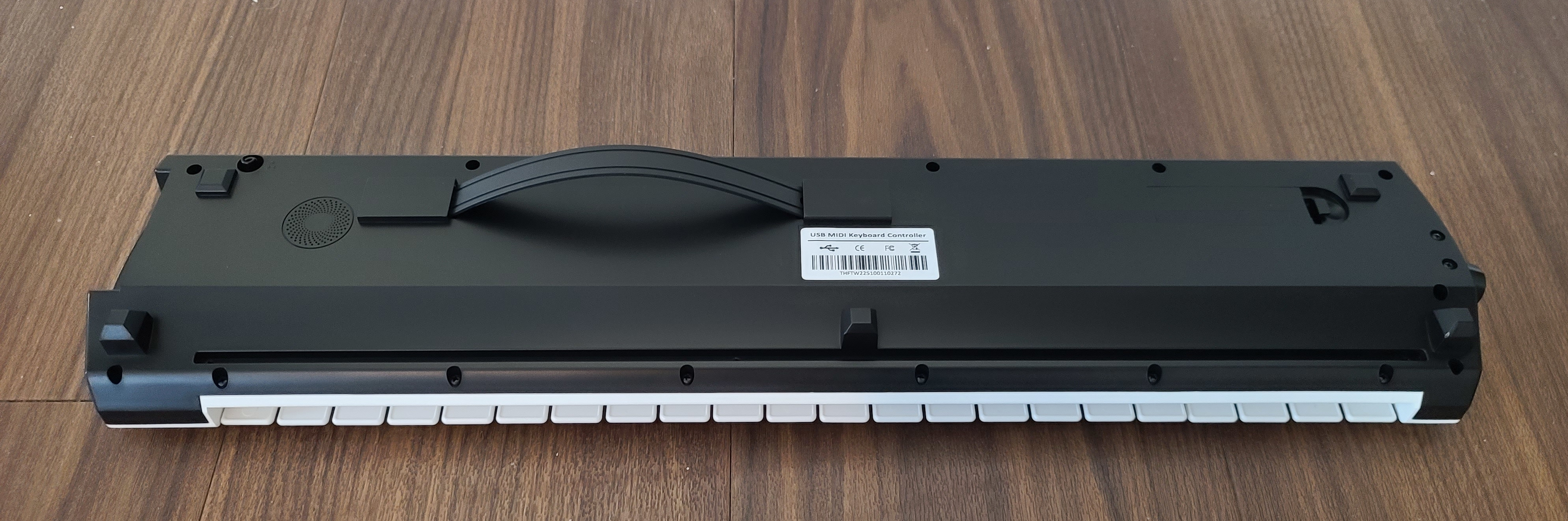
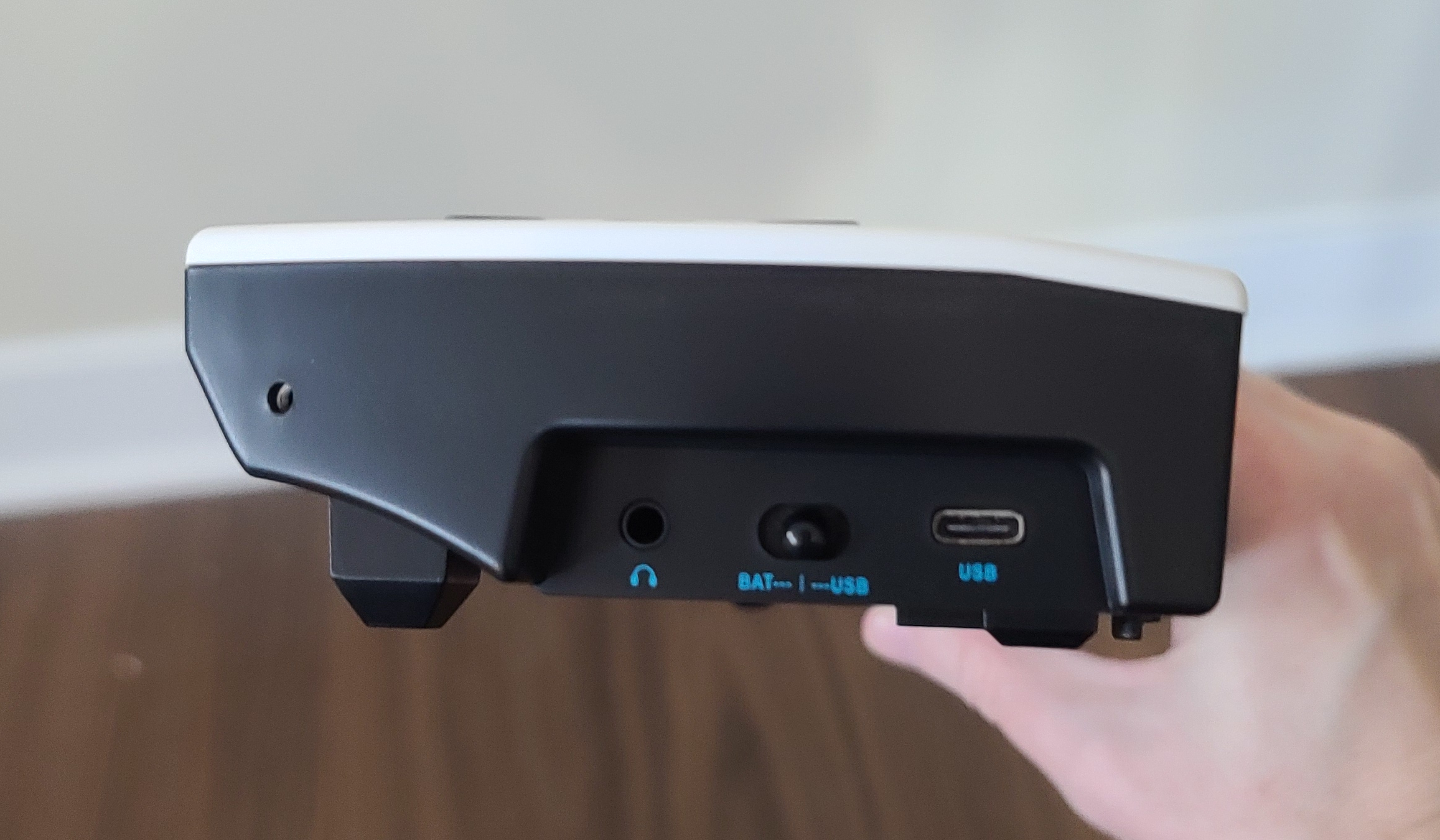
Melodicas are traditionally held by the left hand using a strap on the back on the instrument. The Windkey is no different and features such a strap. However, it also has optional knobs (which come with the instrument) that can be used to attached a shoulder strap. It also has small feet and can also be played on a table. To facilitate playing in these three positions, the instrument includes two mouthpieces: One is small and is designed for playing in instrument in your hand, and the other attaches to a flexible accordion-like tube, so that it can be played on a table or on a shoulder strap. Being both a keyboard and a wind instrument it can play polyphonic music, and also play very expressively including having a crescendo on a sounding note. The instrument runs on 3 AA batteries, or can get power from USB.
To the right of the keyboard there is a small screen. Beneath it there are left and right arrow buttons. These can serve to change instruments, shift octaves, transpose up or down, or change the reverb. It can transpose up or down by up to 12 semitones. It does not have many sound processing functions, but it does have adjustable reverb which is nice and complements its sounds well. It has a built in speaker as well as a headphone jack. It can be used as a midi controller via USB. The breath control can be turned off. In this mode, the keyboard is velocity-sensitive.
The Sylphyo is a very responsive instrument. Sadly, it is not longer being produced. It has touch pads that allow pitch bends. Another one of its features are gyroscopic sensors. It can be programmed to change the sound when the instrument is rotated or tiled up or down. Despite these advanced features, it is appealing to amateurs. It has beginner friendly fingerings such as recorder and flute. Its form factor makes it appealing to novices, as it is small and highly portable.
Like the Warbl, Berglund instruments are all hand made. They fill the void left by the Steiner ones that are no longer available. However, they are more than simply updated versions of Steiner's instruments. They are innovative, and have new types of bite pressure sensors. There is a waiting list to purchase the NuRAD and NuEVI.
Popular musicians have been using the AKAI wind controllers for decades. These include notables such as T-Square. The AKAI instruments are relatively small, light, and durable. They do not have keys that move. Although they can use saxophone fingerings, their lack of movable keys and palm keys make them feel like their own sort of instrument. For this reason I did not include them in the saxophone section. The EWI Solo is now AKAIs entry level instrument. It has an internal synth and speaker. The EWI 5000 is their flagship version. It features more sounds than the Solo and also has wireless MIDI connection. In the past few years AKAI discontinued two of their popular models: the EWI USB, which was one of the less expensive instruments on the market, and the EWI 4000.
Recently some companies have been making instruments that are visually somewhat similar to AKAI's instruments. The Greaten AP300 Pro and AP500 Pro are such instruments. The AP500 Pro was released in 2025. It is slightly smaller than the AKAI EWI 5000. It can synthesize multiple instruments simultaneously. It also has a voice activated system to select an instrument. This is certainly convenient, but in a concert setting may not be ideal. It also features bluetooth midi connectivity, and can connect to two devices at the same time.
The following is a list of electronic instruments of the past and present.
- Akai 3020 (out of production)
- Akai EWI 4000 (out of production)
- Akai EWI 5000
- Akai USB EWI (out of production)
- Akai EWI Solo
- Ashun ASM Diosynth
- Aodyo Sylphyo (out of production)
- Artinoise re.corder
- Berglund Instruments NuRAD
- Berglund Instruments NuEVI
- Berglund Instruments T.WI
- Cantux Research eCorder (out of production)
- Cantux Research eCorder 2
- Carry-on Digital Wind Instrument
- Casio DH 100 (out of production)
- Casio DH 200 (out of production)
- Casio DH 230 (out of production)
- Casio DH 500 (out of production)
- Casio DH 800 (out of production)
- Coolmusic S7
- Digibrass Tilt (out of production)
- Digibrass Tilt 2.0
- Digibrass Tipsy
- EMEO Digital Practice Saxophone
- Greaten AP 300 Pro
- Greaten AP 500 Pro
- KONIX DC02 Pro
- Lyricon II (out of production) by Computone
- Morrison Digital Trumpet (MDT) by Marshall (out of production)
- Mowry Stringed Instruments Warbl (out of production)
- Mowry Stringed Instruments Warbl 2
- NUX NES-1
- Odisei Travel Clarinet
- Odisei Travel Sax
- Robkoo Clarii Mini
- Robkoo R1
- Roland AE-30 Pro
- Roland AE-20
- Roland AE-10
- Roland AE-5
- Roland AE-1
- Roland Brisa
- Steiner EVI (EWI 1000) (out of production)
- Stella Digital Trumpet by David Baylies
- Synthphone (out of production)
- TaHorng midiplus Elefue
- TaHorng midiplus Elesa
- TaHorng midiplus Windkey Electronic Melodica
- Vangoa EWI-100
- Vindor ES1 (out of production)
- Vindor ES2
- Yamaha WX5 (out of production)
- Yamaha WX7 (out of production)
- Yamaha WX11 (out of production)
- Yamaha EZ Trumpet (out of production)
- Yamaha YDS-150
- Yamaha YDS-120
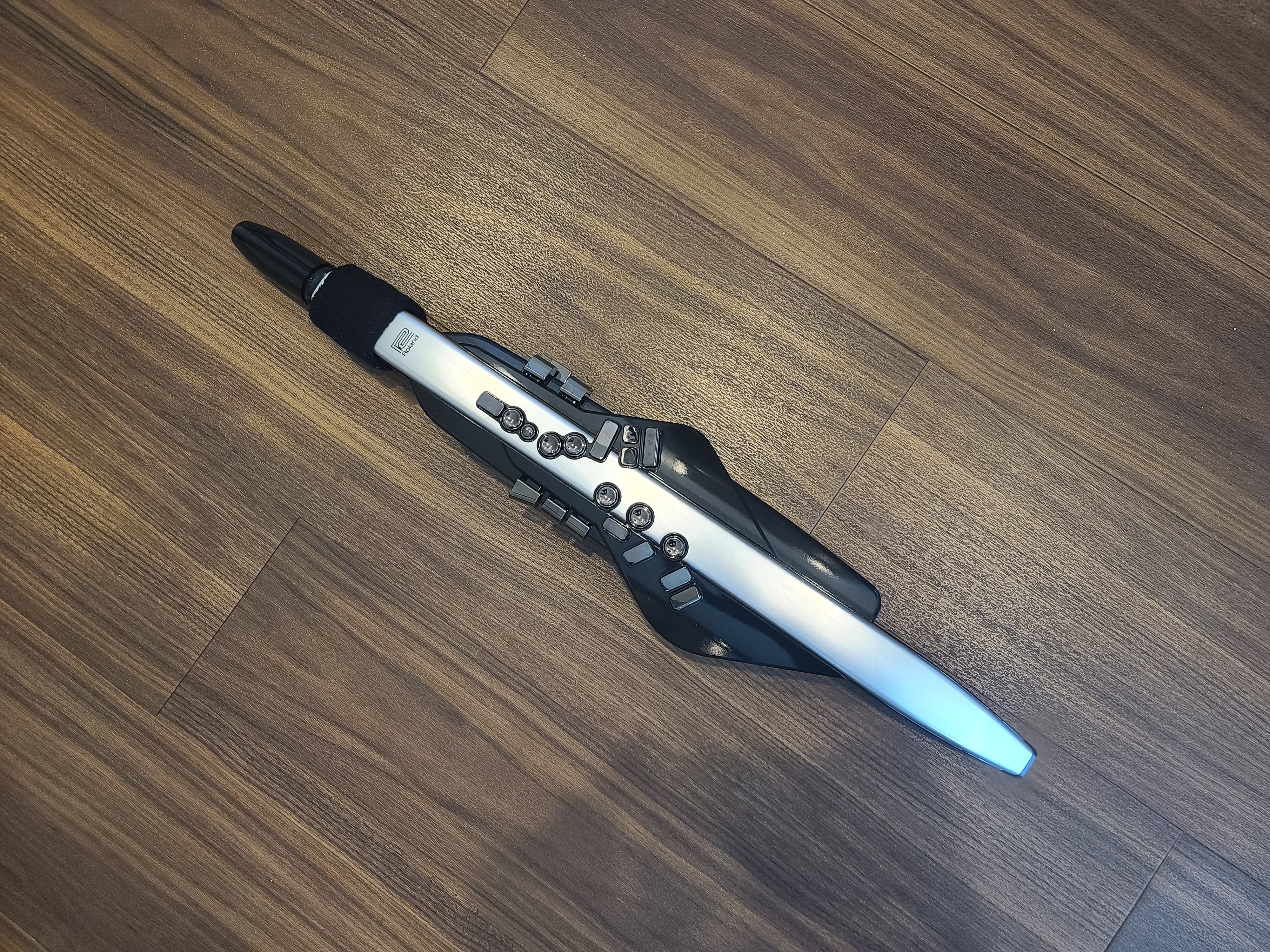
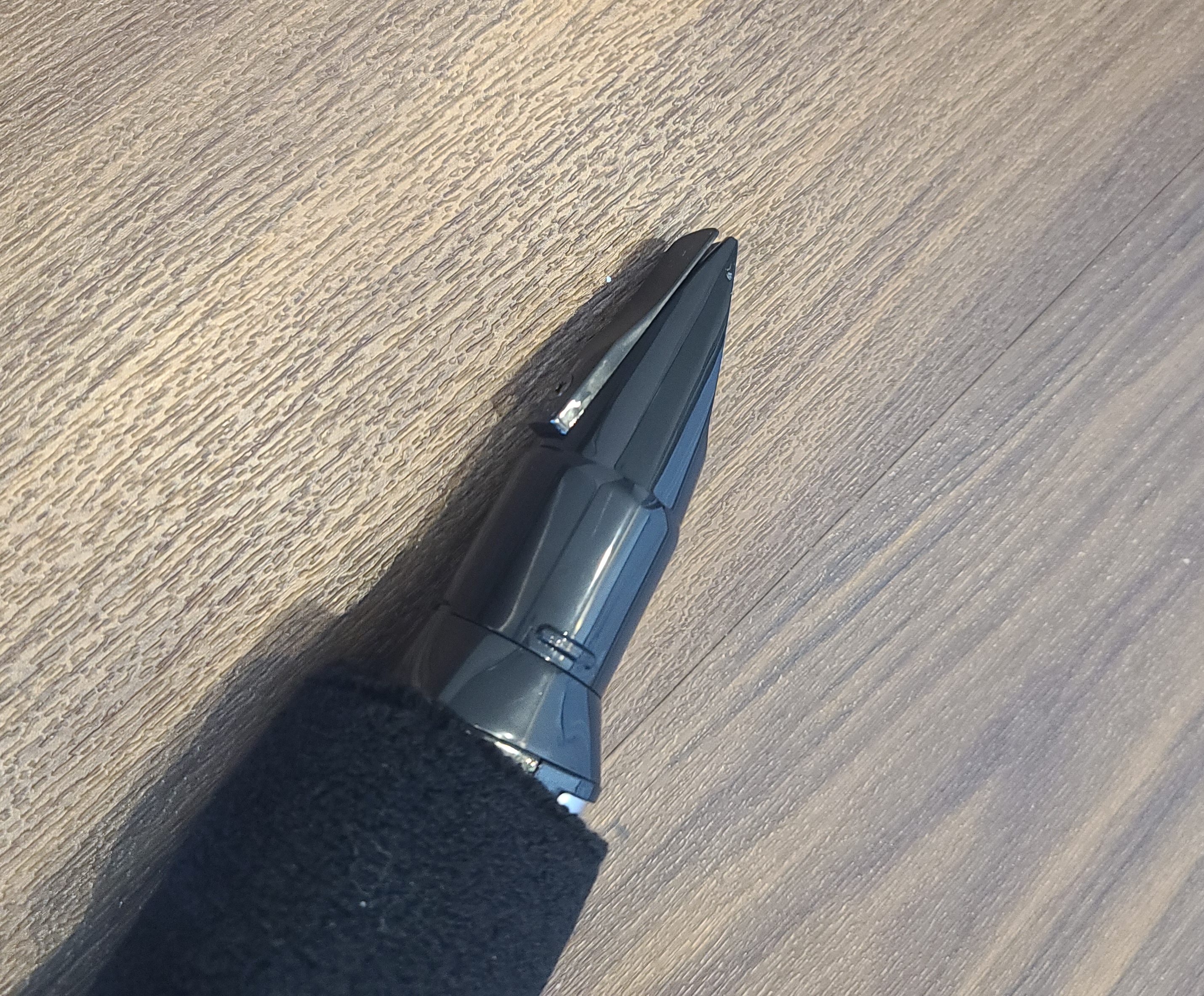
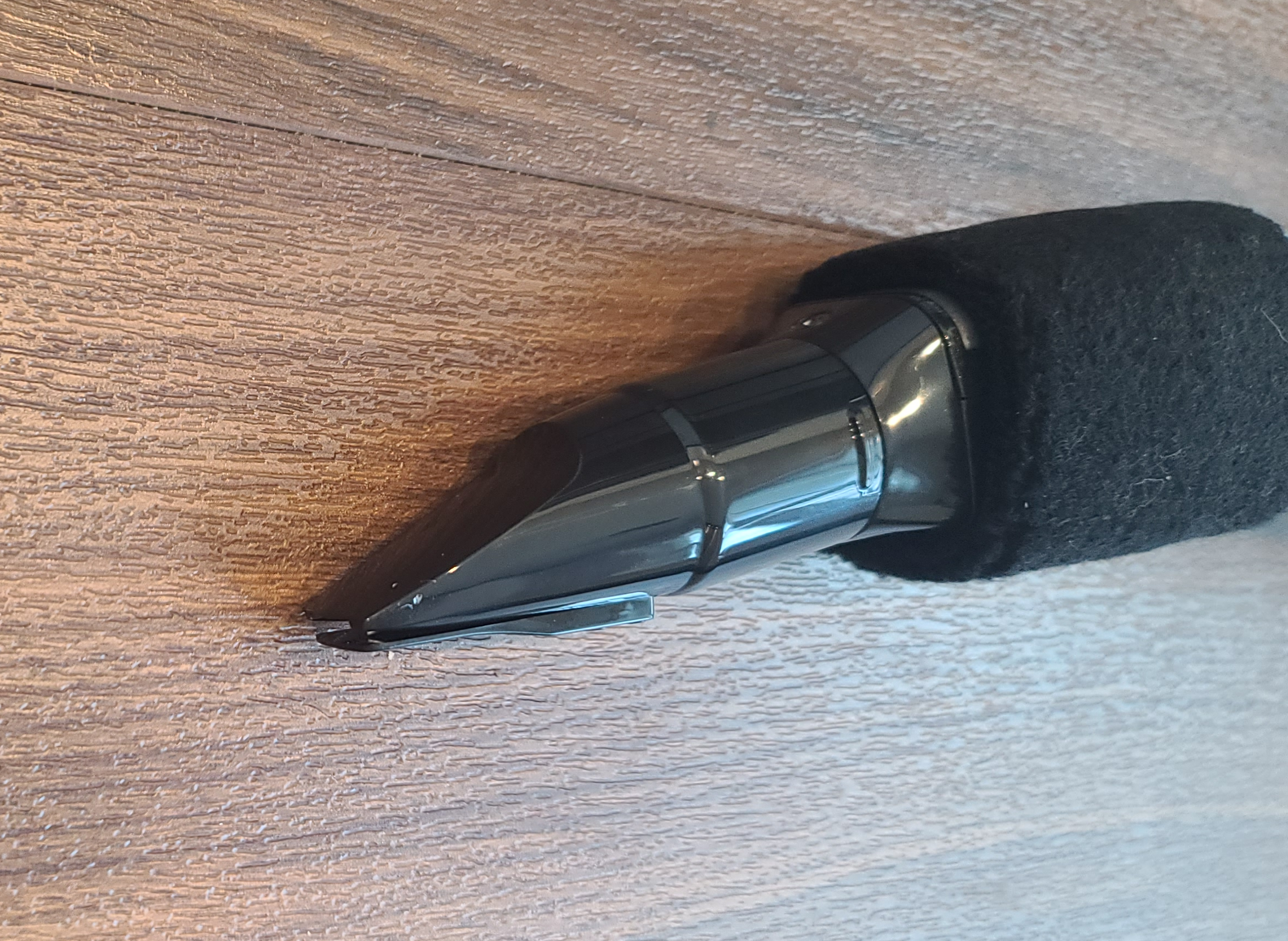
Photos of the Roland Aerophone AE-30 PRO.
Photos of the TaHorng midiplus Windkey Electronic Melodica
Web design copyright 2015 Michael Berger